Types of Tiles Used in Construction: Advantages, Disadvantages & Applications
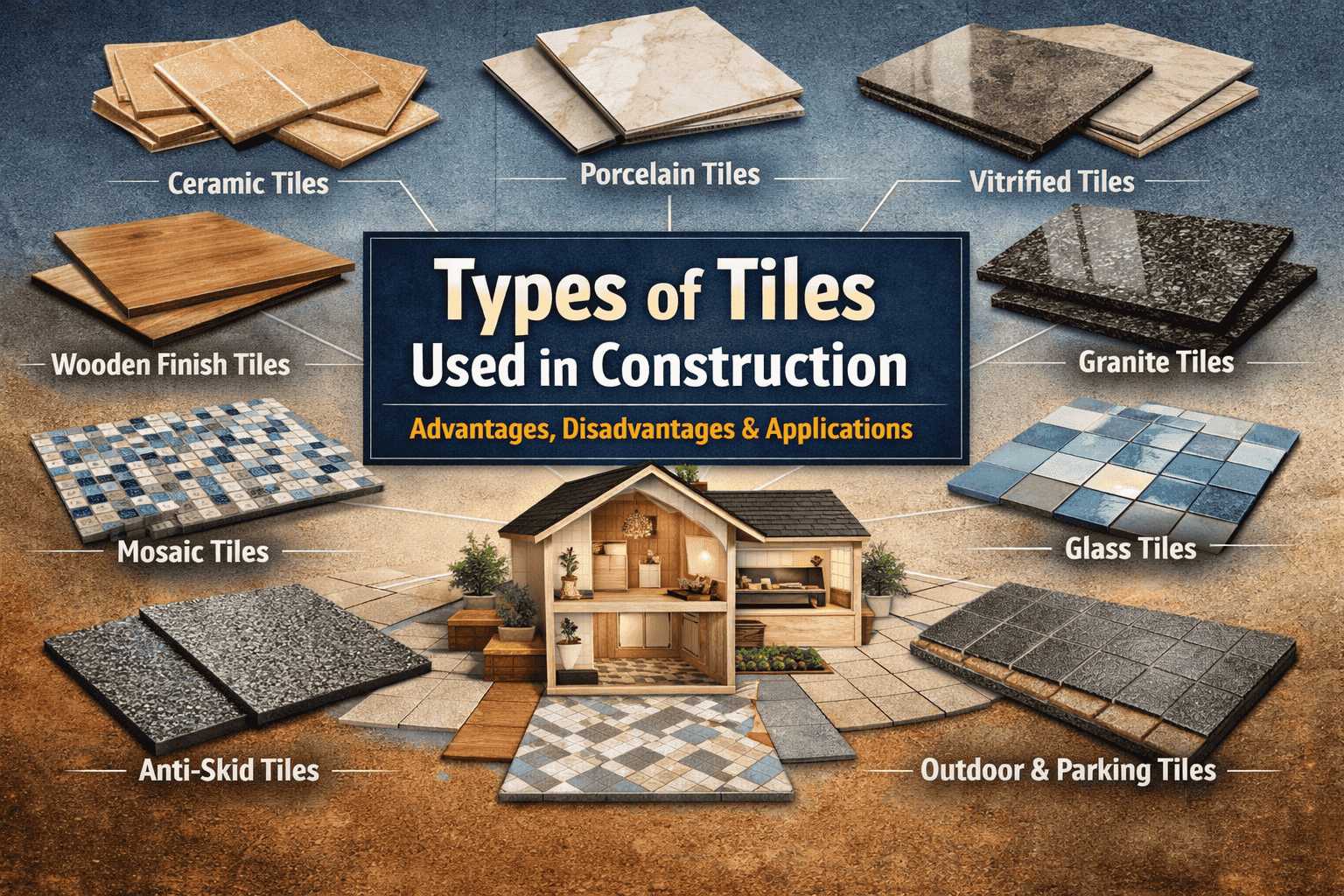
Tiles play a vital role in modern construction and interior design, offering the perfect balance of durability, functionality, and aesthetics. From residential homes and apartments to commercial buildings and industrial spaces, the right type of tile enhances not only the visual appeal but also the performance and lifespan of the structure. With advancements in manufacturing technology, today’s tiles are available in a wide range of materials, finishes, sizes, and designs to suit different applications.
Understanding the different types of tiles is essential for homeowners, architects, engineers, and contractors to make informed decisions during planning and execution. Each tile type has unique properties in terms of strength, water resistance, maintenance, and usage area. In this guide, we will explore the various types of tiles used in construction to help you choose the most suitable option for your project.
What Are Tiles ?
Tiles are thin slabs made from materials such as ceramic, porcelain, stone, cement, or glass, used to cover floors, walls, roofs, and other surfaces. They are fixed using tile adhesive or mortar and finished with grout.
Classification of Tiles 🏢🧱
Tiles can be broadly classified based on:
Material
Usage
Finish
Manufacturing method
Let’s understand each type in detail.
1️⃣ Classification by Material 🏺🪨
Material determines the strength, durability, and look of the tile. Common material-based tile types include:
Ceramic Tiles 🟫: Made from clay, fired at moderate temperatures; ideal for walls and low-traffic floors.
Porcelain Tiles ⚪: Dense and strong, fired at high temperatures; suitable for high-traffic and wet areas.
Vitrified Tiles 🟦: Made from silica, clay, and quartz; strong, low-porosity, and durable for modern interiors.
Natural Stone Tiles 🪨: Includes marble, granite, sandstone; gives a premium, natural look.
Cement Tiles 🟪: Handmade, artistic, matte finish; used for decorative flooring.
Glass Tiles 🟩: Reflective and modern; mainly used for walls and backsplashes.
2️⃣ Classification by Usage 🏠🛠️
Tiles can also be classified according to their intended application:
Floor Tiles 🚶♂️: Stronger, denser, and durable to handle foot traffic. Examples: Vitrified tiles, porcelain tiles, granite tiles.
Wall Tiles 🖼️: Lighter, less dense, easier to fix on vertical surfaces. Examples: Ceramic tiles, mosaic tiles, glass tiles.
Multi-Use Tiles 🔄: Can be used on both floors and walls depending on thickness and finish.
3️⃣ Classification by Finish ✨🛋️
The surface finish affects aesthetics, slip resistance, and maintenance:
Glossy / Polished Finish ✨: Shiny surface, enhances interior aesthetics, easy to clean.
Matt / Natural Finish 🌿: Subtle look, slip-resistant, ideal for bathrooms and terraces.
Textured / Structured Finish 🪵🪨: Imitates wood, stone, or other natural patterns; adds grip and style.
Anti-Skid / Rough Finish 🛡️: Provides extra grip; perfect for wet or outdoor areas.
4️⃣ Classification by Manufacturing Method ⚙️🏭
Tiles can also be classified based on how they are manufactured:
Pressed / Extruded Tiles 🏗️: Common for ceramic and vitrified tiles; shaped using hydraulic pressure.
Double Charge / Full Body Vitrified Tiles 🟦🟦: Pigments run through the full thickness; highly durable.
Soluble Salt Tiles 💰: Decorative surface printing; budget-friendly option for vitrified tiles.
Handmade Tiles 🖌️: Cement, mosaic, or decorative tiles made manually; artistic and unique.
Digital / Glazed Tiles 🖼️: Modern method with digital printing on tiles for intricate designs.
Classification by Material in Detail
1. Ceramic Tiles
Ceramic tiles are made from natural clay and fired at moderate temperatures. They are widely used due to their affordability and variety.
Types:
Glazed Ceramic Tiles: These tiles have a protective glazed layer on the surface, which makes them water-resistant and easy to clean. They are available in a wide range of colors, textures, and designs, making them ideal for wall applications and decorative flooring.
Unglazed Ceramic Tiles: Unglazed tiles have a natural, matte surface and are generally more slip-resistant. They are commonly used in areas where grip and durability are more important than shine.
2. Porcelain Tiles
Porcelain tiles are a premium category of ceramic tiles manufactured at very high temperatures, resulting in a dense and strong structure. Due to their low water absorption and high strength, porcelain tiles are widely used in high-traffic areas and wet zones.
Types:
Full Body Porcelain Tiles: These tiles have uniform color and design throughout their thickness, so scratches are less visible over time. They are highly durable and ideal for commercial floors and heavy-use areas.
Glazed Porcelain Tiles: These tiles have a glazed surface layer that allows digital printing of designs such as marble, stone, or wood. They offer both strength and aesthetics, making them suitable for modern interiors.
3. Vitrified Tiles
Vitrified tiles are manufactured using silica, quartz, and clay, which gives them a glass-like finish and very low porosity. These tiles are known for their high durability, stain resistance, and uniform appearance.
Types:
Full Body Vitrified Tiles: In full body vitrified tiles, the design and color run throughout the entire thickness of the tile. This means even if the surface wears out or gets scratched, the appearance remains almost the same.
Double Charge Vitrified Tiles: Double charge vitrified tiles are made by pressing two layers of colored material on the top surface of the tile during manufacturing. Because of this process, the design goes deeper into the tile (about 4–6 mm) instead of staying only on the surface. Below this layer, the base material is different.
Soluble Salt Tiles: Soluble Salt Vitrified Tiles are a type of vitrified tile where the design is created using soluble inks that are applied on the tile surface before firing. During the firing process, these inks penetrate slightly into the tile body, giving the tile a glossy and uniform appearance at a comparatively lower cost.
Glazed Vitrified Tiles (GVT): Glazed Vitrified Tiles (GVT) are vitrified tiles that have a glazed surface layer with advanced digital printing. This technology allows manufacturers to create high-definition designs that replicate natural materials such as marble, wood, stone, and concrete. GVT tiles combine the strength of vitrified tiles with excellent design variety, making them a popular choice for modern interiors.
4. Natural Stone Tiles 🪨
Natural stone tiles are made from real stones extracted from quarries, cut and finished into tile form. Each tile has a unique texture, color variation, and natural pattern, giving spaces a premium and timeless appearance. Unlike manufactured tiles, natural stone tiles are not man-made, which makes every installation one of a kind.
Common Types of Natural Stone Tiles
Marble Tiles: Known for their elegant veining and luxurious look.
Granite Tiles: Extremely hard and durable with a speckled appearance.
Slate Tiles: Natural cleft surface with excellent slip resistance.
Limestone Tiles: Soft, earthy tones suitable for classic interiors.
Sandstone Tiles: Textured surface, ideal for outdoor applications.
5. Cement Tiles 🧱
Cement tiles, also known as encaustic cement tiles, are decorative tiles made from a mixture of cement, sand, marble powder, and natural pigments. Unlike ceramic or vitrified tiles, cement tiles are not fired in a kiln; instead, they are hydraulically pressed and cured, which gives them a solid, handcrafted feel and rich color depth.
Key Characteristics
Made from natural cement-based materials
Patterns are handcrafted or mould-pressed
Matt, non-glossy finish
Thicker and heavier than ceramic tiles
6. Glass Tiles 🪟✨
Glass tiles are decorative tiles made from processed or recycled glass, known for their high-gloss finish, light-reflecting quality, and vibrant colors. These tiles enhance brightness in a space by reflecting natural and artificial light, making rooms look larger and more elegant. Glass tiles are mainly used for walls and decorative surfaces rather than heavy-duty flooring.
Key Characteristics
Smooth, glossy, and reflective surface
Available in transparent, frosted, and textured finishes
Resistant to stains, moisture, and mold
Commonly available in mosaic and small tile formats
Leave a Reply